Selecting new faucets for your bathroom or kitchen can pose a considerable challenge. With an abundance of styles, designs, and finishes available in the market, the decision-making process can be overwhelming. To aid you in navigating through this myriad of options and making an informed choice, we have curated the following comprehensive guide.
Two Styles of Taps: Contemporary vs Traditional
Taking into account the style and theme of your bathroom is paramount in the faucet selection process. Whether you're undergoing a simple tap replacement or embarking on a complete home renovation, considering the following guidelines can prove beneficial: 1. Determine the Aesthetic: Are you inclined towards a timeless, classic look or do you prefer a more contemporary and modern aesthetic? 2. Assess the Space: Evaluate the size of the room and determine if any rearrangements are necessary to accommodate the new taps effectively. 3. Compatibility with Existing Features: Consider how the chosen taps will integrate with the existing fittings and features of your bathroom. It's advisable to seek expert advice before finalizing your tap selection. This ensures that the chosen taps are compatible with your existing plumbing system and helps you ascertain whether additional accessories such as wastes are required for installation.
Traditional Bathroom Taps
Embodying the timeless elegance of Victorian and traditional design, these classic bathroom taps are a charming addition to any vintage-inspired bathroom setting. Some models feature exquisite mother-of-pearl handles, adding a touch of sophistication to your space. Basin taps typically come with crosshead handles, providing a nostalgic charm reminiscent of bygone eras. With separate taps for hot and cold water, they offer both functionality and aesthetic appeal.
Traditional bathroom taps share a similar aesthetic, yet they offer greater versatility by accommodating both hot and cold water requirements. Available in various configurations, including wall-mounted or deck-mounted options, these taps effortlessly complement different bathroom layouts and styles.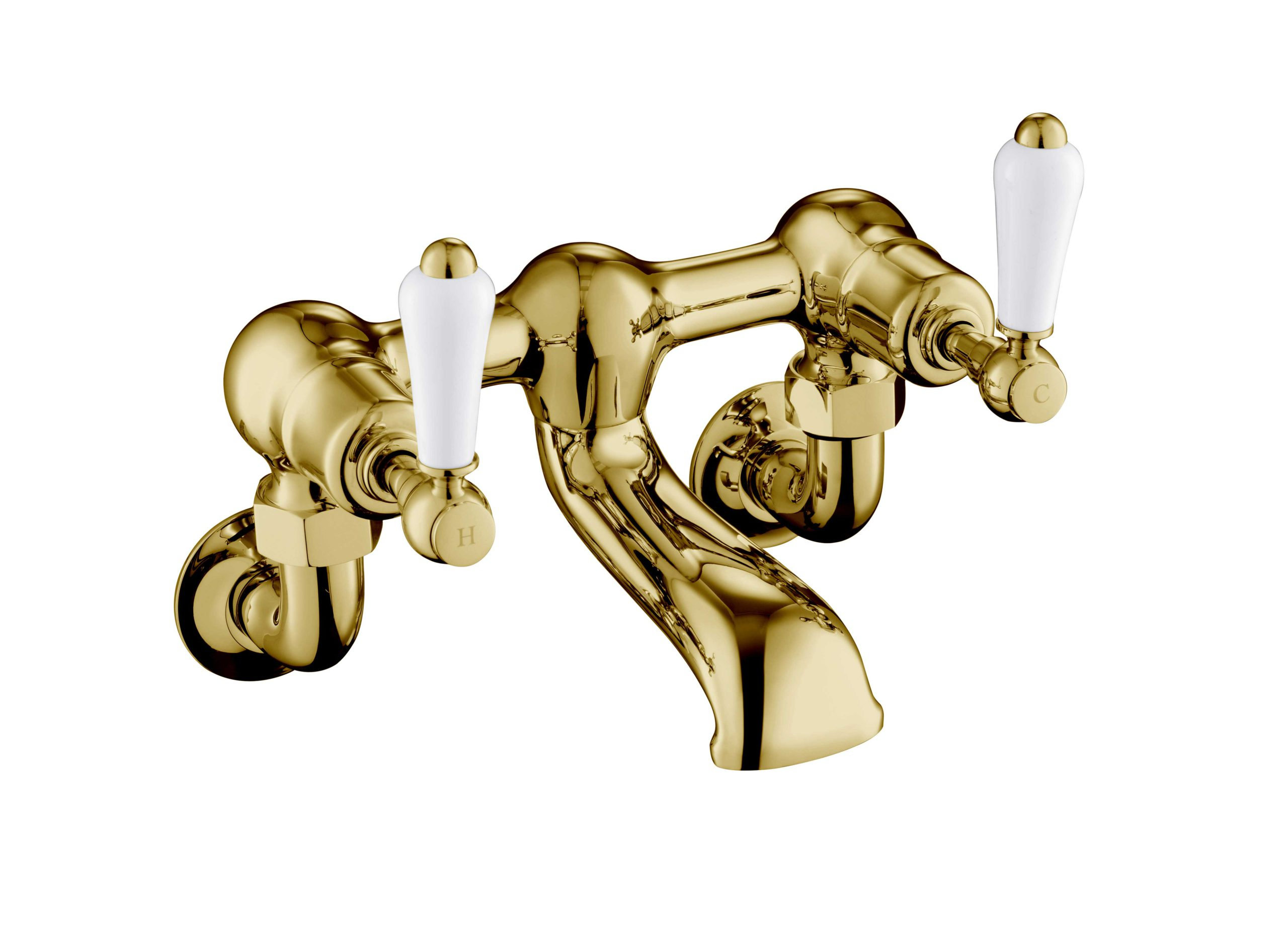
Image Credit : Goldbathroom.co.uk
Taps of Contemporary Design
Contemporary bathroom faucets effortlessly blend innovation with style, offering a delightful twist without compromising on performance or aesthetics. Unlike their traditional counterparts, which typically come in pairs, modern basin taps boast a sleek and minimalist design, often featuring single taps for hot and cold water. With the convenience of lever handles and streamlined aesthetics, these taps bring a touch of sophistication to any bathroom space.
How many tap holes do you have or need?
The number of tap holes present in your basin or bath plays a crucial role in determining the type and range of taps suitable for your needs. Basins typically range from having zero to three tap holes, whereas baths can accommodate up to five tap holes, allowing for additional fillers and shower mixers to be installed as needed.
Mixer Taps
Mixer taps live up to their name by blending hot and cold water streams through a single spout. They come in various forms, including basin mixer taps, bath mixer taps, bidet mixer taps, and kitchen mixer taps, offering versatility across different areas of your home. These taps are adaptable and can be installed in any space, requiring only one, two, or three tap holes for installation. Single-hole basin taps typically feature an all-in-one design with a lever handle, while units with three tap holes offer separate controls for hot and cold water. For basins without tap holes, options include countertop-mounted taps or wall-mounted taps.
.jpg) |
| Image Credit : Tapron.co.uk |
Pillar Taps
Pillar taps typically come as a duo, with one tap designated for either hot or cold water. These taps boast a traditional design, frequently featuring crosshead or lever handles for operation. They are available for both basin tap and bathtub applications, offering a classic aesthetic for various fixtures in your home.
 |
| Image Credit : Tapron.co.uk |
Bath Fillers and Overflow Fillers
Tub taps are also called tub fillers and come in a similar range as mixers and pillar taps.
Fillers with 0-holes - Freestanding bathtub taps, and other fillers
1-hole Fillers - Single hot/cold water function and spout
2-hole Fillers - Separate hot and cold fillers joined by one spout
These 3-hole fillers can be used for hot and cold water taps and an independent spout, either deck-mounted or wall mounted bath tap. They can also be used with a 2-hole filler, but with a separate handset for the shower.
These fillers have 4-5 holes - they are the same as the 2 and 3 hole bath taps but separate holes for hand-held showers
Certain bath units are equipped with provisions for overflow bath fillers. These fillers are designed to facilitate the filling of the bath using a waste overflow, necessitating additional fittings such as manual valves for proper functionality.
What are the Different Types Of Taps?
Once you've identified the number of tap holes and settled on the style—be it modern or traditional—you can then select the type of tap based on its functionality and water release mechanism.
Taps with features
Monobloc (Mono) Taps: Monobloc taps are mixer taps, featuring a single tap and spout for mixing water.
Waterfall Taps: Waterfall taps release water in a cascading manner, offering a unique and visually appealing alternative to traditional downward-spouting taps.
Taps with fixings
Wall Mounted Taps: Secure the taps onto the wall. They feature dual temperature control and may include a spray function, or they may have separate wall controls with a spray option.
Deck-Mounted taps: These taps are affixed to the sink or bathtub. They can either be combined with controls and spouts or installed separately.
Floor-Fixed Taps: These taps are mounted on the floor. They are available in both traditional and modern styles and can be equipped with manual or thermostatic features.
What size taps are available?
Taps vary in size due to differences in design, functionality, and placement. While some mixer and pillar taps may share similarities or offer comparable features, their heights can vary significantly.
Cloakroom faucets or mini taps are ideal for smaller basin units or areas with limited space, offering practicality in compact settings. In contrast, tall taps are better suited for larger countertop basins and spacious kitchen sinks, providing ample room and ease of access. Notably, these taps belong to the higher end of our product range in terms of pricing.
What water pressure do I need for taps?
To ensure you select the most suitable tap for your home, it's crucial to assess your water pressure. If you're uncertain about where to start, our comprehensive guide will walk you through the process of measuring and evaluating your water pressure levels. Fortunately, many taps are designed to accommodate low pressures, sometimes as minimal as 0.1 bar. However, if your water pressure is exceptionally low or difficult to enhance, there are various solutions available. Conversely, some taps are engineered to withstand higher water pressures, typically around 3 bar. It's essential to thoroughly review the product specifications before making a purchase. If you have any doubts or inquiries, consulting with a plumber can provide valuable insights to help you make an informed decision.
What Materials are Taps Made from and Are They Available in Different Finishes?
Taps exhibit a diverse array of colors and finishes, typically crafted from machined brass and subsequently coated with various metallic finishes.
Although Chrome remains a popular choice for taps, the market offers a plethora of alternatives including stainless steel, nickel, and brushed brass. An emerging trend in bathroom design involves incorporating taps in non-traditional hues. Currently, black and white taps are particularly en vogue, adding a chic and contemporary touch to any space.
For further exploration of the myriad styles and products available from different brands, we invite you to delve into our comprehensive blog dedicated to tap colors. Discover inspiration and insights to help you make the perfect choice for your home.
What Does a Tap Cost?
Tap prices fluctuate based on factors like design, brand, style, and material. For instance, budget-friendly basin taps may start at around £50 per pair, while more contemporary options like mono-mixer lever taps can range upwards to approximately £650. When it comes to bath taps, costs can vary significantly depending on location and features. Freestanding bath taps, renowned for their versatility and luxurious aesthetics, typically fall within the price range of £400 to £2,500. Similarly, wall- or deck-mounted taps exhibit a comparable price range, with top-tier options reaching up to £1,000.
Image Credit : Goldbathroom.co.uk
If you're considering upgrading your bathroom taps, you might find helpful insights in this guide on https://goldbathroom.uk/blogs/news/how-to-easily-change-bath-taps-guide . It offers straightforward instructions for DIY enthusiasts looking to tackle tap replacement projects ,
